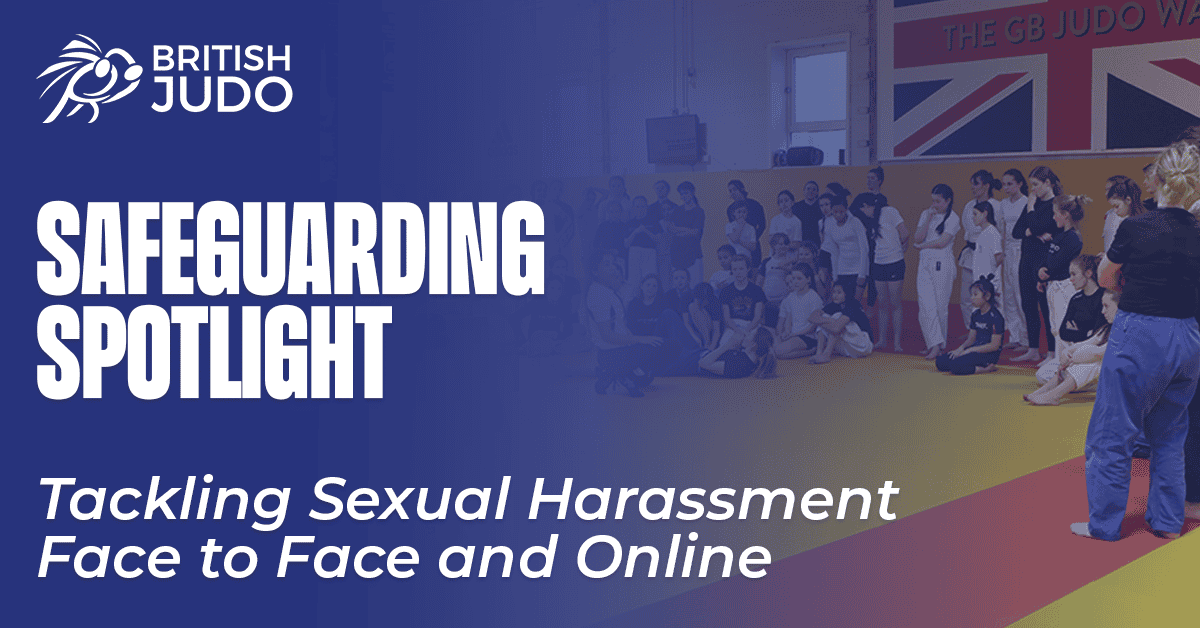
Safeguarding Spotlight: Tackling Sexual Harassment Face to Face and Online
October 22, 2026
This month, our Safeguarding Spotlight focuses on the experiences of women and girls who face sexual harassment, both face-to-face and online, and how we can work together to create a safe and inclusive environment for everyone involved in judo.
We have seen growing concern around the experiences of women and girls in relation to sexual harassment in society, including across sectors such as sport.
Sexual harassment can prevent women and girls from engaging in activities they have every right to attend. As individuals, and as a judo community, we all have responsibilities to help protect women and girls from these experiences.
This article covers sensitive topics – please take care when reading.
What is Sexual Harassment?
Sexual harassment can happen both face-to-face and online. It can include unwanted sexual comments or behaviour, harassment, intimidation and other conduct that causes someone to feel unsafe or distressed.
Harassment can have a significant impact on a person’s wellbeing and can prevent women and girls from feeling able to participate fully in sport and other activities.
It is important that inappropriate behaviour is not dismissed as simply “banter” or something that should be tolerated.
Understanding Our Legal Responsibilities
In the UK, harassment legislation is primarily governed by the Protection from Harassment Act 1997, which prohibits harassment and provides civil remedies, including injunctions to protect individuals from harassment.
You can find out more about the Protection from Harassment Act 1997.
The Protection from Sex-Based Harassment in Public Act 2023 establishes a criminal offence for intentionally causing harassment, alarm or distress in public because of a person’s sex or perceived sex.
The legislation aims to make public spaces safer and ensure accountability for perpetrators of sex-based harassment, including behaviour such as verbal abuse, leering, groping or following individuals in a threatening manner.
The Worker Protection (Amendment of Equality Act 2010) Act 2023 also requires employers in England, Scotland and Wales to take reasonable steps to prevent sexual harassment at work. Enforcement of this duty began on 26 October 2024.
The Equality Act 2010 also addresses discrimination law, including harassment related to protected characteristics.
What Does This Mean for Judo?
Our responsibilities do not stop at the law. We all have a role to play in creating a judo environment where women and girls feel safe, included and able to participate.
Judo clubs should consider how they can help prevent harassment and respond appropriately when concerns are raised.
This includes:
- Taking concerns about harassment seriously.
- Creating an environment where members feel able to speak up about inappropriate behaviour.
- Challenging inappropriate or harmful behaviour rather than dismissing it.
- Ensuring members know how and where to report a concern.
- Supporting women and girls to participate in judo without feeling excluded or intimidated.
Online Harassment
Harassment does not only happen face to face.
Online spaces can expose young people to harmful and misogynistic views. Terms such as the manosphere, red-pill and incel are increasingly used to describe online communities and content that can promote stereotyped versions of masculinity, misogyny and opposition to feminism.
The influence of harmful online content can extend into real-world behaviour and violence.
Parents, carers, coaches and other adults who work with young people should be aware of the potential risks and help young people understand the importance of respectful relationships and behaviour online.
Challenging Harmful Attitudes
We need to recognise the concerns around sexual harassment and violence against women and girls and understand that we all have a role to play in challenging inappropriate behaviour.
Coaches and other role models can help young people by challenging harmful stereotypes, promoting respect and encouraging positive attitudes towards women and girls.
Creating a safe and inclusive sporting environment helps ensure that women and girls can participate in activities they have every right to attend.
What to Do if You Want to Report a Concern
If you experience or witness sexual harassment, or have a concern about someone’s behaviour, it is important to report it.
If the concern relates to an incident in a British Judo club, competition, event, National Training Centre or Head Office, you can report it to British Judo through our Reporting a Safeguarding Concern process.
If you believe a crime has taken place or someone is in immediate danger, contact the police on 999.
For concerns relating to harassment and stalking, the Crown Prosecution Service provides guidance on the importance of victim safety and protective orders.
The NSPCC’s Impact of Misogyny in Sport masterclass explores the impact of misogyny in sport and how those working with children and young people can recognise and challenge harmful attitudes and behaviours. Find out more about the masterclass here.
You can also find further information and guidance from ACAS, Our Streets Now, This Girl Can and the British Judo Trauma-Informed Coaching & Clubs initiative.
Support and Contact
For further information, please contact the British Judo Safeguarding Team by emailing safeguarding@britishjudo.org.uk