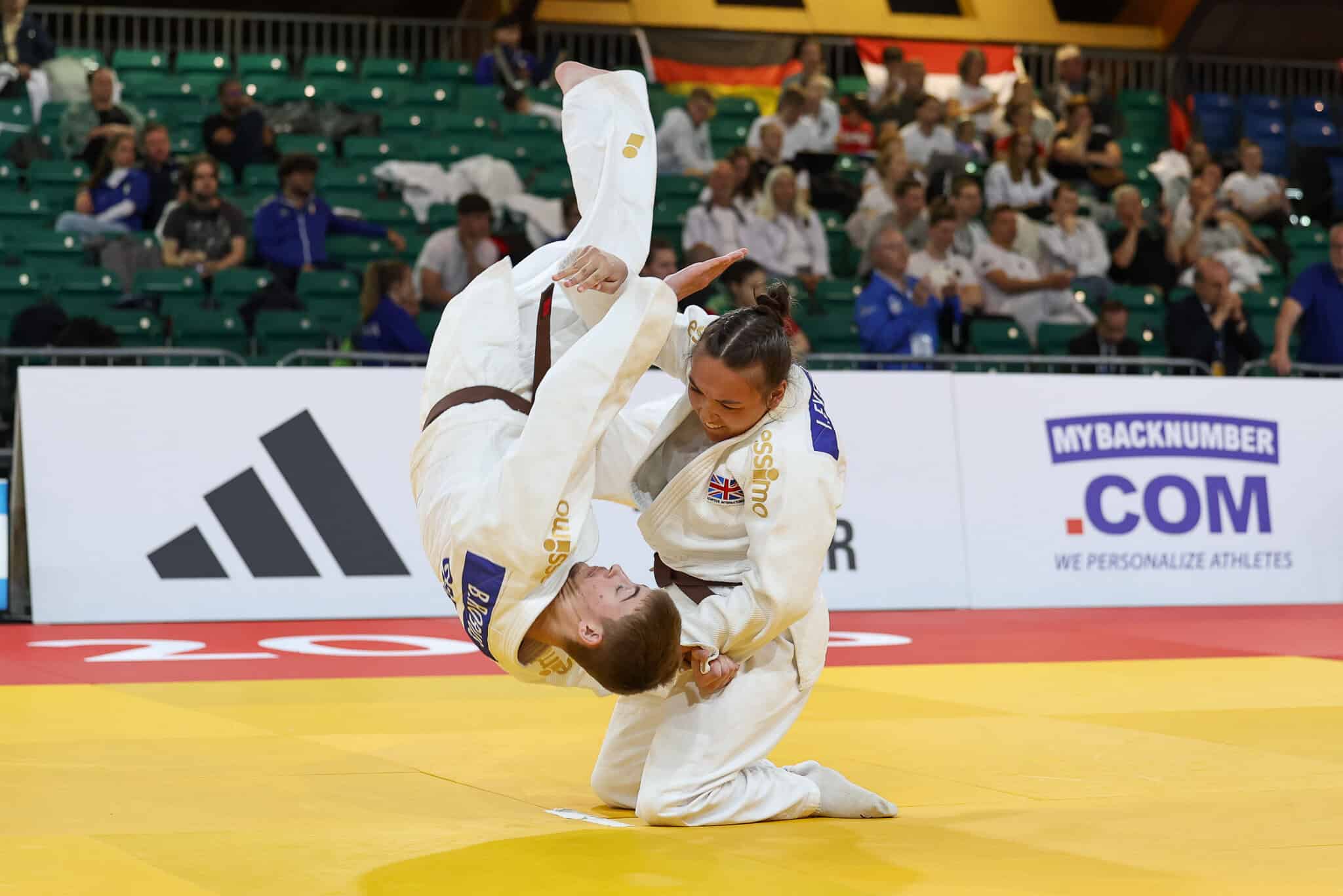
Izzy Everest: Redefining What’s Possible on the Judo Mat
February 02, 2026
At British Judo, we believe judo is more than a sport – it is a way of life shaped by respect, courage and adaptability.
Few people reflect those values more powerfully than Izzy Everest. A full-time wheelchair user with cerebral palsy, Izzy’s journey in judo is not defined by limitation, but by resilience, innovation and a determination to focus on what is possible, using judo as the space where she found her strength, confidence and belonging on the mat.
Izzy was recently invited to a Social Value Conference to speak about her journey, and we are proud to introduce the speech that she gave to a captivated audience:
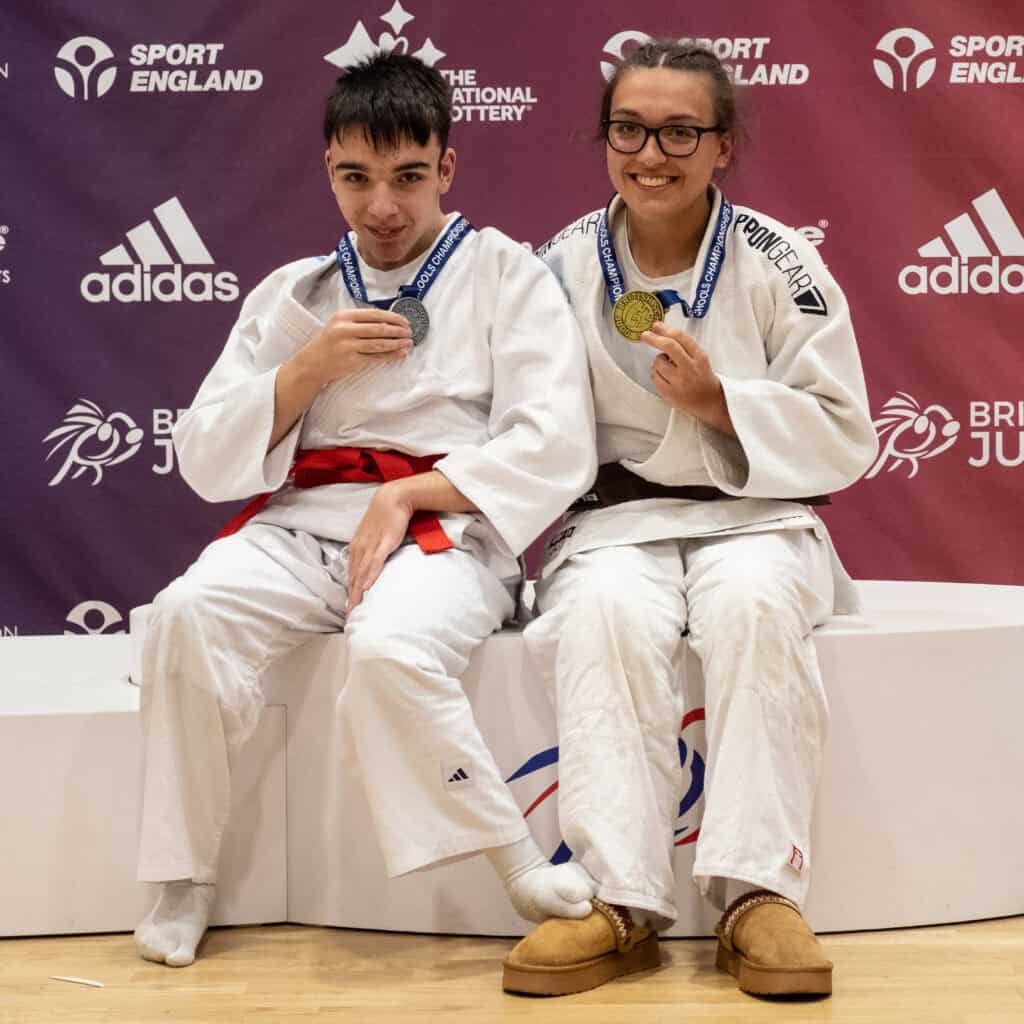
My name is Izzie. I am an athlete and full time wheelchair user with a passion for Judo, all things fitness and raising awareness for inclusive sports.
Today, I want to share with you my journey—one that’s been full of challenges, surprises, and a whole lot of determination. Imagine being a full-time wheelchair user and then deciding, “Hey, I think I’ll take up judo!” Yep, that’s me. Born with cerebral palsy no actual prognosis except a neurologist telling my parents she may never talk or walk so go home it’s down to you and her whatever that means.
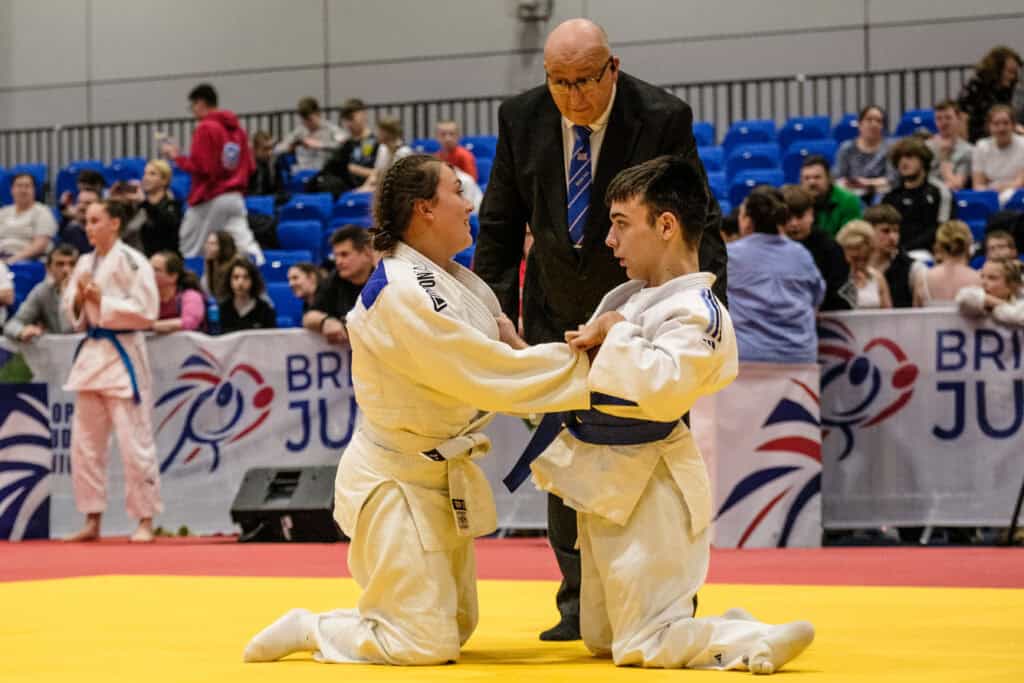
My dad, who’s also my coach, runs an inclusive club—yes, run by my parents—where everyone gets to throw, hopefully not end up in A&E. It’s a place where I’ve learned that disability isn’t a barrier; it’s just a different way to execute fight both in Judo and in life because when you are disabled life is always a battle. Plus, I get free coaching, so that’s a win!
Now, being physically disabled has brought some challenges, both on and off the mat. Some of these challenges are so “hidden” that no one even knew they existed until I entered their world. Like the time I wasn’t invited to parties—just because of accessibility issues or because people were “scared” of my disability.
My journey also included hundreds of hospital appointments—think of it as my version of a spa routine, but with more x-rays. I underwent pioneering surgery—surgery that wouldn’t normally be offered to someone with my level of disability. But I was committed. It meant a tough year of intensive physio, including both ankles being broken, realigned, and then having eight plates inserted into both my knees—yes, eight!—plus the lengthening of tendons, followed by months in plaster casts, and what can only be described as tent pegs through my ankles. Was it hell? Absolutely. Do I regret it? Not for a second.
Because that work paid off. It gave me the ability to train harder and push my judo to a whole new level. I wasn’t going to be just the girl in a wheelchair or the girl who got bullied at secondary school because she had a 1:1 to carry her bag. No, I wanted to show the world that being in a wheelchair isn’t a barrier—it’s just a different way of doing things.
Before 2017, I competed in judo and always came away with the Spirit of Judo Award. I’d smile my way through fights, determined not to be known as “the girl who smiled her way through.” But let me tell you, I was pretty serious about proving that my limbs might not work in the same way as everyone else’s, and that I wouldn’t break. Coaches quickly realized I wasn’t fragile; in fact, I was tougher than most mainstream athletes. I pushed myself and adapted judo training to a higher level, focusing on improving my balance and strength—because if life throws you a tough throw, you better throw it right back.
In 2017, I traveled to Holland to compete in the Pan-European Disability Judo Championships—and guess what? I came home with Gold! Think about it—I was just 11 years old and had become a European adaptive champion. That moment was like winning an Olympic gold, only without the huge crowds and with a lot more chocolate afterwards. I had done it. I was officially a European champion. And then, in 2018, I lost it—just like anyone does when they have a bad day at the office. But that’s okay because bouncing back makes you stronger.
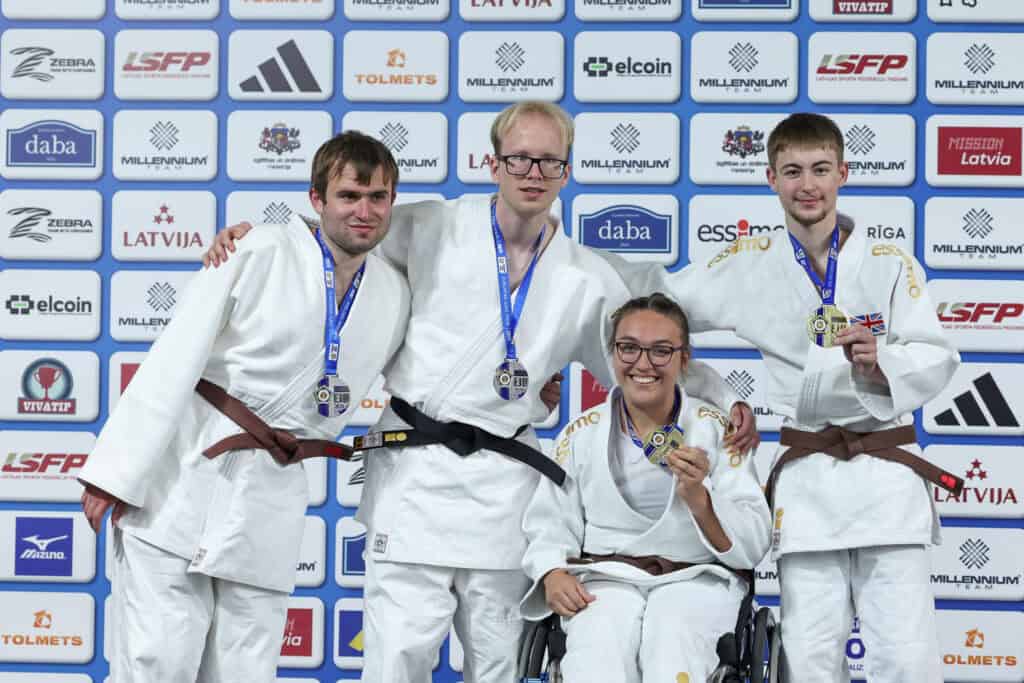
Then, 2019 came around, and I regained my title. Because we all know, sometimes life throws a curveball, or a bad day, but it’s how you come back that counts. And I was ready. Ready to prove that disability isn’t a limitation—just a different perspective.
But then, the world changed. COVID hit, and training stopped. all I could do was train in my own space and in my gym but I was in there every day doing my best to keep fit, keep healthy. Isolation was hard—like being stuck in a really long, really boring match with no referee to call it. But during that time, I realized I wanted to change the world of judo. I wanted to open it up to new possibilities.
So, I got back on the mat, not just to train but to challenge perceptions. Along with a fellow judoka we adapted Nage no Kata—which translates to judo in its truest form Think of it as “Come Dancing,” as my mum likes to say—so maybe I should start wearing sequins next! But seriously, showing that Kata can be performed in a way that includes disability was a huge breakthrough. We’re talking about opening up the discipline—making it accessible and inspiring others to see that judo isn’t just about throws; it’s about spirit, respect, resilience, and innovation.
And guess what? We took that spirit all the way to Holland again—not only winning a European title but also becoming World Kata champions! Yes, I became the first judoka to compete on my knees, and you know what? I won’t lie—doing it on my knees was challenging, but it was also incredibly empowering. It proved that with enough courage and creativity, we can redefine what’s possible.
So here I am: a girl in a wheelchair, a former European Judo champion, a World Kata champion, and someone who believes that the real victory isn’t just about medals but about breaking barriers and changing perceptions—one throw, one kata at a time.
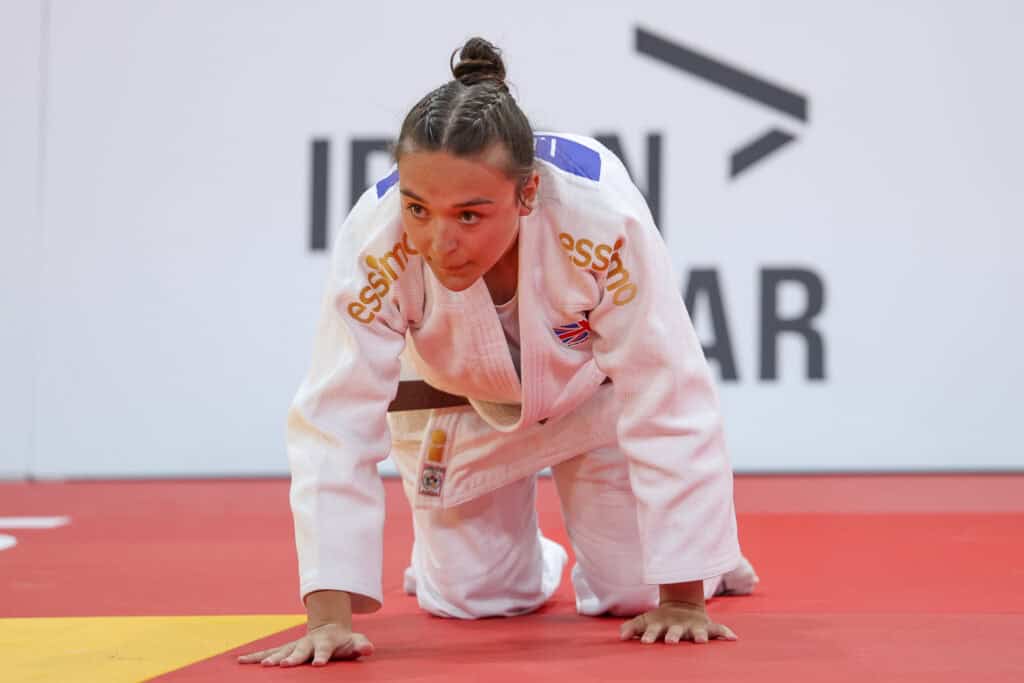
As someone who lives, eats, and breathes disability 24/7, I have very strong opinions on inclusion. In my eyes, athletes with disabilities should be able to train and compete alongside mainstream athletes—just like we do at my club, Westerleigh—true inclusion. Because, let’s face it, if we only have our own category, we might as well be separate but equal, and no one wants to be that!
My partner and I decided to try our luck at the British Kata Championships. Now, this event had no adaptive category—I’m not saying we caused a bit of a stir, but I will say, they were definitely out of their depth when I turned up. But you know what? That was actually the point. We showcased what we could do, and we did it well. We became British champions. And I can happily report that we were invited back to showcase again in Sheffield. It turned out to be a real game-changer—it showed that judo is a sport for all abilities. We broke down some barriers, and honestly, if we can do it, so can everyone else.
That same year, my club decided to take the trip to Ireland—Tipperary, to be precise. And I can confirm, folks, that Tipperary is a long way from anywhere! But it was worth every mile because I came home as the Irish Open champion—another gold to add to my collection. I told my family, “Look, I’ve got enough medals now to build my own Olympic podium!”
Traveling, competing, and winning across borders, I’ve realized—disability shouldn’t be a barrier; it should be a bridge. A bridge to more opportunities, more inspiration, and more medals. And if I can do all that with a big smile, a lot of humor, and a little bit of stubbornness—well, I think that’s a lesson for us all.
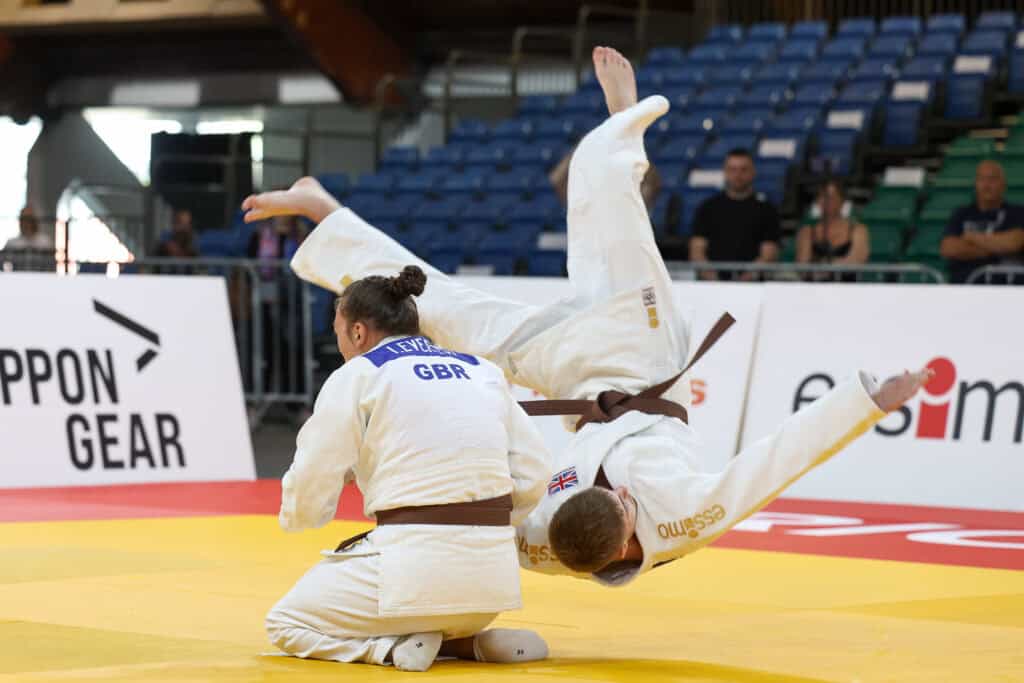
2023 was quite the year! Holland — Pan Disability World Kata Champion again and World Judo Champion — something I only ever dreamed of. Then Cardiff, showcasing Kata at the Adaptive Championships. Back to Ireland — not such a good day at the office — came home with Bronze. I put it down to it being a long way to Tipperary… or maybe I just needed to pull up my big girl pants and accept that sometimes, I can’t always win (annoying, I know).
Things in 2024 just got better. I qualified as a Level One Coach! I’m not just the girl in the wheelchair anymore — I’m also known as “my lady in the wheelbarrow” (thanks to one of our adaptive athletes I coach) and “Hot Wheels” (courtesy of a small child). Beats “spastic” from the bullies any day, right?
My Kata partner and I were awarded our GB badges — finally, recognition for all the hard work! We were now representing GB in Kata. Back to Holland — Gold in Kata (again!) — we were unstoppable. Silver in Judo wasn’t ideal, but hey,
Then came the biggest moment of my career — representing GB at the first-ever European Judo Union Adaptive Kata Competition in Sarajevo. We made history — the first judo athletes ever to bring home a medal for Britain in Kata. And not just any medal — Gold! Adaptive or mainstream, it counts the same in my book.
I kept the momentum going — Venray: Gold and Silver. This year’s been just as busy — training, competing, winning. Holland again: Gold in Kata, Bronze in Judo I was fighting with a suspected broken Thumb. That’s dedication… or madness. Probably both.
Gold at the British Schools Championships. Riga, Latvia — Gold. Wales Adaptive Open — yep, you guessed it — Gold again!
I’ve just completed my Level One Kata course, soon onto Level Two. Fingers crossed hopefully funding allows us to compete in America January 2026— and then back to Holland.

The barriers are coming down, slowly but surely. My dream? To one day compete in the Paralympics. Sadly, right now, you have to be visually impaired — and my eyes are one part of me that actually works. There’s talk this might change in the future, so watch this space. For now, I’ll keep doing what I love — rolling, fighting, and proving that limits are mostly in people’s heads.
Disability shouldn’t be a barrier; it should be a bridge.
By living these values, that I have previously mentioned show that inclusion, equity, and opportunity are not abstract ideals — they are the foundations of a fair and thriving society. Individuals, community groups and organisations like yourselves can support, raise awareness and create spaces where everyone can participate fully, contribute meaningfully, and succeed proudly.
And before I go — here are my Top 10 Tips on How Not to Annoy Someone in a Wheelchair (aka: “Hot Wheels’ Guide to Common Sense”):
- Talk to me, not the person pushing me. I promise, I do have a voice.
- If I’m paying for something, don’t hand the change to my carer. They’re on minimum wage — I’m the one with the shopping addiction.
- Don’t look at a disabled child and say “Oh bless.” Our parents have the same days off as everyone else’s.
- Handles aren’t an invitation. Don’t just push someone’s chair unless you fancy being called a “mobile nuisance.”
- Ask me what I want to eat. I’ve spent years perfecting my menu choices.
- Yes, we drink. If we’re over 18, we’ve earned it — and sometimes we really need it.
- Don’t assume we chose this life. We didn’t — but employers could help by making the world more accessible. (I’m still a student, but working on it!)
- If you say you’re accessible — be accessible. Better yet, ask someone in a wheelchair to test it for you.
- Don’t judge parents whose kids don’t fit your idea of “normal.” You don’t know their story.
- Never assume. It’s the single biggest obstacle I face — and usually, it’s someone else’s, not mine.
Remember—whatever your challenge, keep smiling, keep throwing your best punches, and never let anyone tell you what you can’t do. Because I’m living proof that with heart, humour, and a lot of determination, anything is possible.
Izzy will be attending our National Adaptive Training Day and Conference this weekend as we continue our mission of bringing judoka, coaches, volunteers and clubs together to learn, share best practice and champion adaptive judo. Get involved, attend, and be part of shaping a judo community where everyone belongs and everyone can thrive—on and off the tatami.
Izzy will be presenting at the Conference on the Sunday, so don’t miss out on hearing from this inspiring young lady.