2026 Contest Rules to be Implemented from 21 February
February 11, 2026
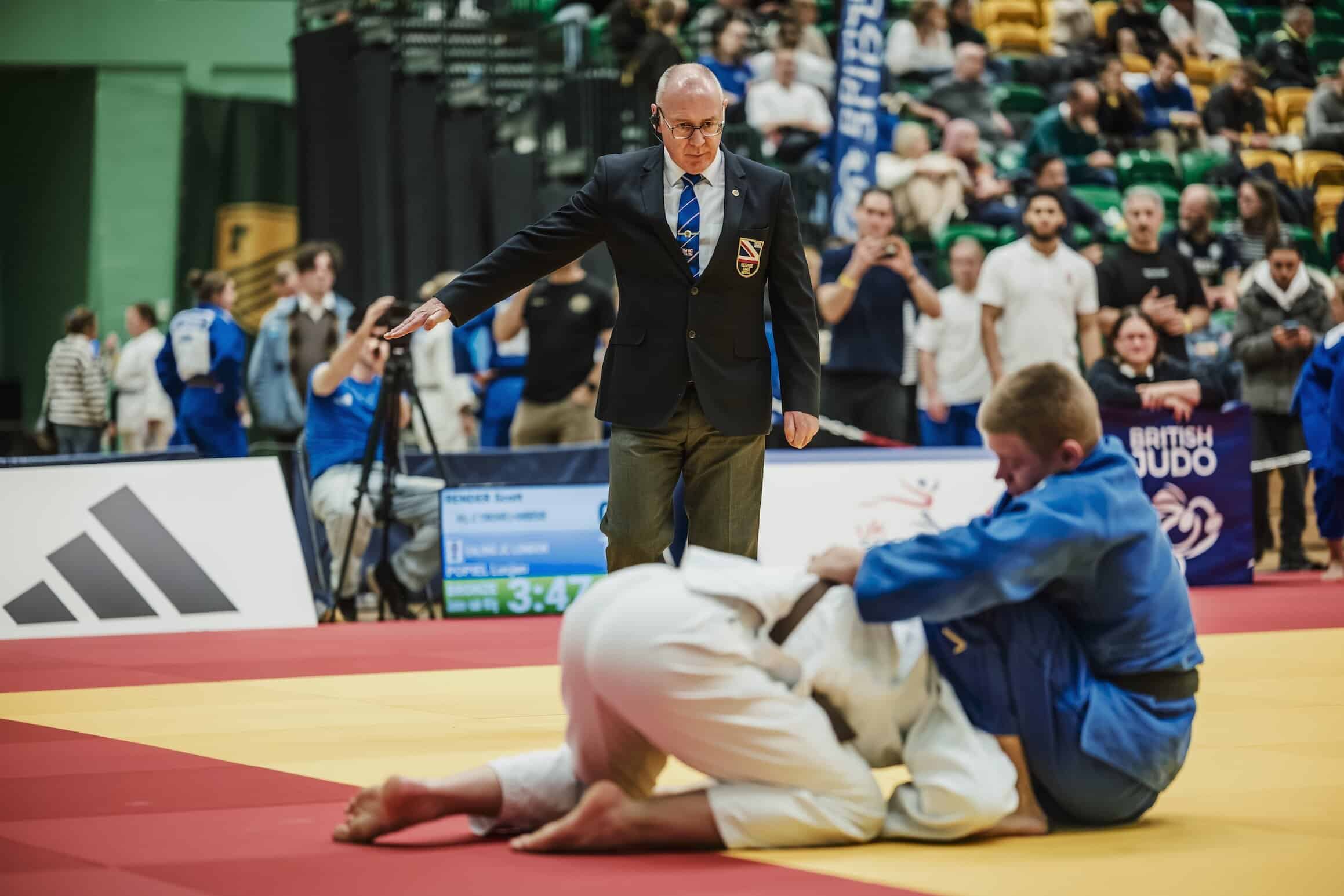
Following approval by British Judo, the International Judo Federation’s 2026 contest rules will be adopted at all British events effective 21 February 2026, beginning with the English Open.
This more minor set of rule clarifications follow the more significant changes introduced last year following the Paris Olympic cycle. The changes again provide further opportunities to score with yuko and changes to penalties support positive judo in tachi-waza and ne-waza.
To summarise the changes:
- Yuko – Single buttock landings, and side landings, with or without touching elbow(s) and/or arm(s) to the mat, are now also scored yuko.
- Grip Breaking Penalty – Breaking grips with one or two hands but keeping at least one grip is allowed. Breaking grips with one hand and not keeping a grip is allowed. It is only now breaking with two hands but not keeping a grip that is shido.
- Time Wasting Penalty – Wasting time by not standing up, by not immediately returning to the starting position, by arranging the hair or judogi for too long, by tying the belt for too long. The first occasion a warning is given. Second and further occasions are shido. We will apply this penalty in full at Level 4, but only sparingly at Levels 1-3.
This will be signalled by the referee gesturing with an upturned palm toward the starting position, and then with a single raised finger indicating a warning or pointing toward the athlete and announcing shido. The existing hair or judogi signals may also be used.
- Neck and spine safety / ushiro-sangaku – Applying ushiro-sangaku grip in ne-waza, with or without mate, with a higher risk of injury to the opponent’s neck or spinal vertebrae, will be considered hansoku-make.
- Non-combativity / Passivity Penalty – When considering whether to give shido for not attacking, attacks in both tachi-waza and in newaza will be considered.
- Injury (treatment) – An athlete may receive treatment of any type (most typically for bleeding) on two occasions only. A third occasion will be declared kiken-gachi. Previously, two treatments ‘per site’ were allowed.
- Kata-sangaku – Applying a throw with the kata-sangaku grip, with lower risk to the neck/spine will be shido (no longer direct disqualification), however higher risk throws will continue to be direct hansoku-make.
British Judo also amends the contest rules to support the development of our judoka, and can confirm the following updates to our amended rules:
- Unconsciousness – we confirm in line with our Head Injury and Strangulation Protocol that unconsciousness for any reason, at any level, will result in withdrawal from the competition. The concept of an athlete continuing after unconscious ‘at their own risk’ no longer exists. Athletes and coaches should follow the protocol guidance for a managed return to judo.
- Reverse seoi-nage and head to throw/defend penalties – Now to apply to Cadets or U18 consistent with IJF approach. We remove the blanket application to all ages Level 1-3.
- Kata-sangaku roll restriction – Amended to apply to Cadets (with exception of L4 events) and U18 categories only, removing the level and grade criteria. We no longer penalise with shido the repeated taking of the grip, mate will continue to be called.
- Hair and Gi retying penalties – As with the new timewasting penalty, we will apply these penalties in full at Level 4, but with guidance on very sparing use at Level 3 and below.
Full details of the 2026 rules and the BJA application of them are available in our updated rulebooks available here
Referees in charge will provide short briefings on the new rules to referees and coaches at the beginning of the competition day. Many of our International and Continental referees will have experience using the new rules at IJF and EJU events in February and are equipped to support their colleagues and to answer questions from athletes or coaches – both in the run up to and after the application of the new rules.
Further training on the new rules, open to all BJA members, will be available at the National Refereeing Seminar – the date will be advertised later this year. A number of refereeing and contest rules courses, available for all members, are also being run by areas and will be listed in the BJA events calendar.